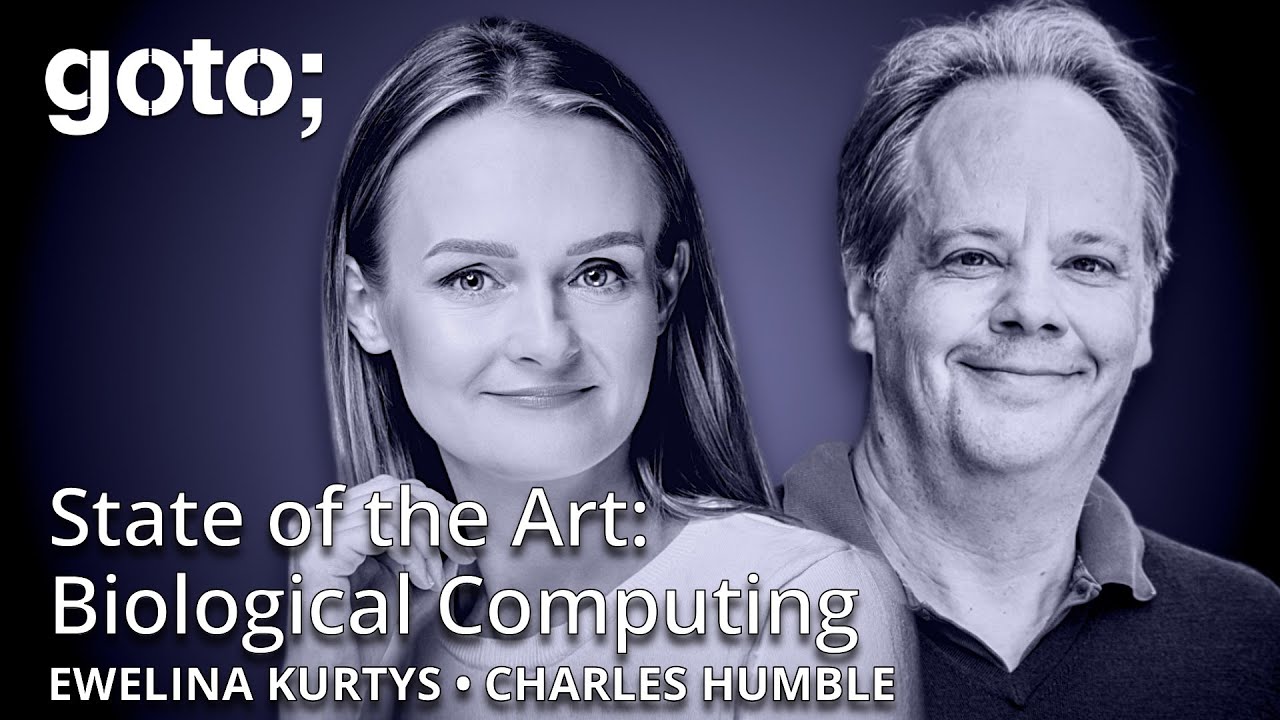
State of the Art of Biological Computing
You need to be signed in to add a collection
Dr. Ewelina Kurtys, Strategy Advisor at FinalSpark, discusses the revolutionary potential of biological computing with host Charles Humble. The conversation explores FinalSpark's ambitious goal to build computers using living neurons that are 1 million times more energy efficient than current digital systems. Ewelina explains the technical challenges of working with brain organoids, the ethical considerations of using human stem cells, and why biological neurons could dramatically reduce AI costs while offering unique advantages for complex tasks like generative AI. The interview covers everything from neural encoding and plasticity to consciousness and the deterministic nature of the brain.
Transcript
Dr. Ewelina Kurtys, Strategy Advisor at FinalSpark, discusses the revolutionary potential of biological computing with host Charles Humble.
The conversation explores FinalSpark's ambitious goal to build computers using living neurons that are 1 million times more energy efficient than current digital systems. Ewelina explains the technical challenges of working with brain organoids, the ethical considerations of using human stem cells, and why biological neurons could dramatically reduce AI costs while offering unique advantages for complex tasks like generative AI. The interview covers everything from neural encoding and plasticity to consciousness and the deterministic nature of the brain.
About the speakers

Freelance Techie, Podcaster, Editor, Author & Consultant

Strategic advisor on frontier technologies