Home GOTO Experts Charles Humble

Charles is an IT industry veteran with 30 years' experience. A former software engineer, architect and CTO, he has worked as a senior leader and executive of both technology and content groups. He is experienced as a commissioning editor, was InfoQ's editor-in-chief from 2014-2020, and was chief editor for Container Solutions from 2020-2023. During his time at CS he launched and ran WTF is Cloud Native with the marketing team, and created and hosted the Hacking the Org podcast.

He writes regularly for The New Stack, O'Reilly and other publications, is a highly experienced content strategist, and has spoken at multiple international conferences including GOTO (keynote), Devoxx, WTF is SRE, and QCon.

His primary areas of interest are: how we build software better, including sustainability and ethics; cloud computing; remote working; diversity and inclusion; and inspiring the next generation of developers.

Charles is also a keyboard player, and is 1/2 of ambient techno band Twofish.

Upcoming masterclasses featuring Charles Humble

Sustainable Systems Architecture: Faster, Cheaper, Greener Software

The tech industry now consumes an estimated 2–3% of global electricity, and AI adoption is rapidly accelerating that number. Yet many engineers are unsure where sustainability fits into their day-to-day decisions, or assume the solution lies in esoteric programming languages or full rewrites.

In reality, the biggest sustainability gains come from architecture and operations, not code micro-optimisations.

This full-day workshop provides a practical, operations-first framework for designing and running sustainable software systems. Participants will learn how reducing carbon emissions often results in a “triple win”: lower costs, better security, and simpler, faster systems—challenging the traditional “Good, Fast, Cheap: Pick Two” trade-off.

Through case studies, interactive exercises, and real-world examples, attendees will learn how to assess their organisation’s current maturity, identify high-impact improvements, and make a credible business case for change. Topics range from zombie servers and rightsizing to carbon-aware computing, cloud architecture choices, and the growing sustainability challenges of AI.

Participants will leave with concrete techniques they can apply immediately, plus a clear action plan for improving the sustainability of their systems, without waiting for perfect data or executive mandates.

What You’ll Learn

By the end of this workshop, participants will be able to:

  • Understand where software systems really consume energy and carbon
  • Apply an operations-first approach to sustainability
  • Identify quick wins that reduce emissions and costs
  • Measure impact using practical proxies and available tools
  • Design cloud architectures with sustainability in mind
  • Understand the unique sustainability challenges posed by AI workloads
  • Build a compelling business case aligned with cost, security, and risk
  • Create an actionable sustainability roadmap for their team or organisation

Workshop Format

Morning Session

  • The carbon landscape: scopes, energy proportionality, and why utilisation matters
  • Why operations dominate sustainability outcomes
  • Measurement challenges and practical metrics
  • Interactive exercise: assessing your organisation using the Green Software Maturity Matrix

Afternoon Session

  • Sustainable cloud architecture patterns and trade-offs
  • Demand shifting, carbon-aware computing, and graceful degradation
  • AI sustainability: training vs. inference, and when not to use AI
  • Making the business case: cost, security, compliance, and talent
  • Interactive exercise: drafting a sustainability action plan

The workshop combines short talks, discussion, case studies, and hands-on exercises.

Prerequisites

No specific programming language knowledge required. Attendees should have:

  • At least a basic understanding of cloud computing and software deployment
  • Familiarity with operating production systems

Who Should Attend

  • Developers responsible for system design or performance
  • Platform, infrastructure, and SRE engineers
  • Architects modernising legacy systems
  • Tech leads and CTOs balancing cost, performance, and risk

Key Takeaways

Participants will leave with:

  • A clear understanding of IT’s environmental impact and their influence on it
  • Practical strategies that reduce carbon emissions without sacrificing performance
  • Knowledge of available measurement tools and realistic metrics
  • A draft sustainability action plan tailored to their organisation
  • Resources for continued learning and implementation
Tuesday Sep 29 @ 09:00 | Copenhagen, Denmark

Reserve your spot now

Upcoming conference sessions featuring Charles Humble

State of the Art of Biological Computing

Dr. Ewelina Kurtys, Strategy Advisor at FinalSpark, discusses the revolutionary potential of biological computing with host Charles Humble.

The conversation explores FinalSpark's ambitious goal to build computers using living neurons that are 1 million times more energy efficient than current digital systems. Ewelina explains the technical challenges of working with brain organoids, the ethical considerations of using human stem cells, and why biological neurons could dramatically reduce AI costs while offering unique advantages for complex tasks like generative AI. The interview covers everything from neural encoding and plasticity to consciousness and the deterministic nature of the brain.

Tuesday Mar 3 @ 09:00 @ GOTO Unscripted

Get conference pass

State of the Art of Container Security

In this State of the Art episode, Charles Humble speaks with Adrian Mouat, Developer Relations at Chainguard and author of "Using Docker", about the evolution of container security and the persistent challenge of outdated packages.

Adrian explains how traditional Linux distributions weren't designed for the immutable, frequently-replaced nature of containers, leading to security vulnerabilities that scanners detect but teams struggle to address. He discusses how Chainguard tackles this problem by building everything from source using Wolfi, creating minimal "distroless" images with near-zero CVEs, and how concepts like SBOMs, attestations, and defense in depth are reshaping security practices.

The conversation also covers major security incidents including the XZ Utils backdoor and Shai-hulud attacks, emphasizing the importance of building from source, using short-lived credentials, and replacing rather than updating containers – practices pioneered by companies like Google that are gradually spreading across the industry.

Tuesday Mar 3 @ 09:00 @ GOTO Unscripted

Get conference pass

Content featuring Charles Humble

51:39
Remote Working Approaches That Worked (And Some That Didn’t)
GOTO Aarhus 2023
43:38
Writing For Nerds - Blogging For Fun and (Not Much) Profit
GOTO Aarhus 2023
46:40
Technical Leadership in Media: Architecture, Communication & AI Challenges at FT
GOTO Unscripted
42:15
State of the Art of Biological Computing
GOTO Unscripted
46:10
How to Learn: Unlocking the Brain's Secrets
GOTO Unscripted
Insights on Leadership & Innovation
GOTO Unscripted
43:27
How Structures Affect Outcomes: Insights from Software Engineering Leader Elisabeth Hendrickson
GOTO Unscripted
52:02
How To Lead Through Transformation in Tech
GOTO Unscripted
37:44
Building Software That Survives: Autonomy, Architecture & Alignment at Scale
GOTO Unscripted
45:22
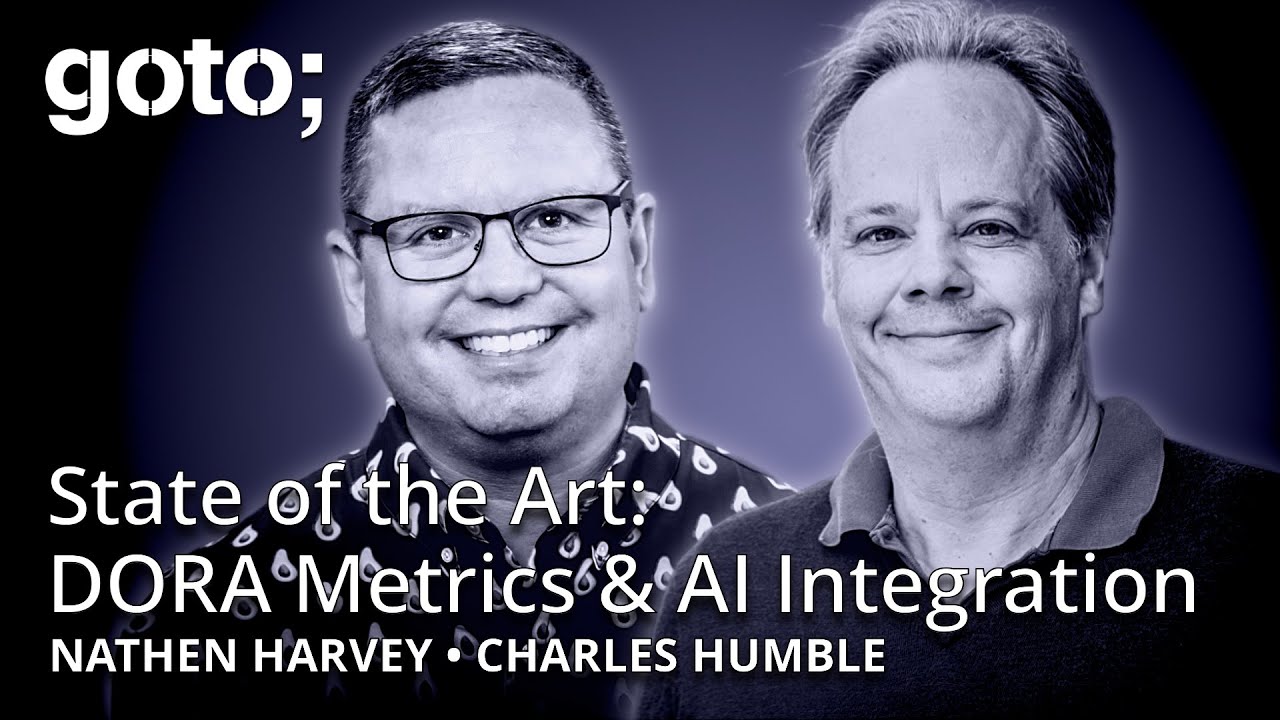
State of the Art of DORA Metrics & AI Integration
GOTO Unscripted
34:01
How to Deal with Software Complexity
GOTO Unscripted
44:18
The Value Flywheel Effect: A Modern Cloud Strategy
GOTO Unscripted
48:33
The End of Engineering's Blank Check: Accountability in Software Leadership
GOTO Unscripted
39:15
State of the Art of Container Security
GOTO Unscripted
58:32
From Hardware Hacker to CTO: Building Teams That Scale
GOTO Unscripted
Quarkus Unveiled: Efficiency & Green Impact
GOTO Unscripted
47:03
Dynamic Teams: Reteaming Patterns & Practices
GOTO Unscripted
53:17
Building Modern Software at Scale: Architectural Principles Two Decades in the Making
GOTO Unscripted
35:39
How Architecture & Culture Go Hand in Hand
GOTO Unscripted
48:42
Beyond Storytelling: A Deep Dive into Wardley Mapping
GOTO Unscripted
41:15
Writing Greener Software Even When You Are Stuck On-Prem
GOTO Copenhagen 2024
Browse all experts

Here