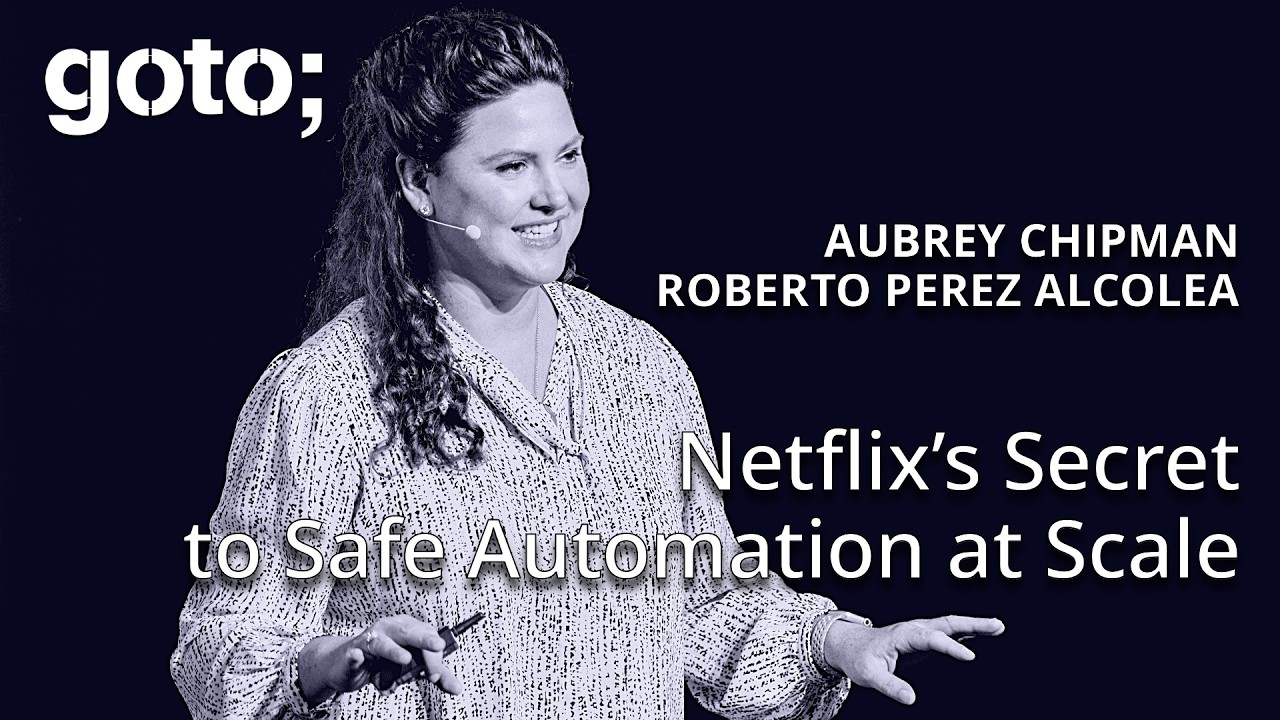
Aubrey Chipman
Senior Engineer at Netflix
Aubrey is a senior software engineer at Netflix, where she helps shape the developer experience for thousands of engineers working on JVM-based applications and services. As part of the JVM Ecosystem Team in the Developer Productivity Organization, she builds and maintains the infrastructure behind reliable builds, smart dependency management, and scalable test tooling—leveraging technologies like Gradle, Nebula, and Java.
Aubrey is a strong advocate for developer productivity and clarity in complex systems. She works hands-on to improve build performance with tools like Gradle Enterprise, build caching, and test distribution, while also contributing to the evolution of Netflix’s internal plugin ecosystem. With a passion for clean builds and fewer flaky tests, she empowers engineers to move faster and ship with confidence, and she is passionate about building tools that are both powerful and delightful to use.
Upcoming conference sessions featuring Aubrey Chipman
Tag. Publish. Hope.
Think about how carefully we ship applications: staged rollouts, canary analysis, automated rollback, observability at every step. Now think about how we ship libraries: Tag a version. Publish. Hope.
At Netflix, this blind spot caught up with us across thousands of libraries and 5,000+ repositories. Upgrades broke services overnight because nobody could see the blast radius beforehand. Security patches took days because we couldn't answer ""which libraries actually matter."" Teams deprecated libraries with no way to tell consumers ""hey, start planning your move."" So we set out to build a paved road for libraries.
Once we started digging, things got uncomfortable. Many libraries we considered ""actively maintained"" hadn't had a real human change in over a year, just bots keeping the lights on. We kicked off a major migration and couldn't tell which repos would be affected for over half the fleet. Basic questions, no answers. But the hardest part wasn't technical. It was cultural: how do you bring lifecycle governance to an org that values speed and autonomy without becoming the team everyone routes around?
This talk is about what we're learning as we build that paved road. It's an ongoing effort, not a finished product. I'll walk through the five things we think it needs: stability signals, compatibility validation, impact visibility, lifecycle communication, and proportional escalation. I'll share why we bet on tools that inform instead of block, why we started small and earned trust before scaling, and why ""people decide, tools guide"" became our north star.
We're also still figuring some things out. Where's the line between healthy maintenance and slow-motion abandonment? When should advisory become enforcement? How do you measure library health without turning it into a vanity metric?
We're done tagging, publishing, and hoping.
Get conference pass
Content featuring Aubrey Chipman
From Lag to Lightning: Confident, Automated Changes at Scale
Browse all experts
Here