Annie Vella
Engineering Leader and Researcher
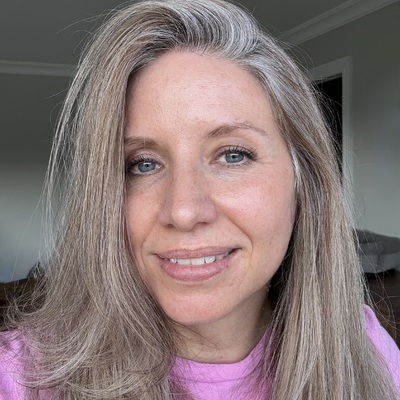
Annie Vella
Engineering Leader and Researcher
Annie Vella is an engineering leader and researcher focused on AI adoption, governing agentic systems at scale, and the transformation of software engineering as the craft changes. Until recently she was a Distinguished Engineer at Westpac New Zealand, where she shaped the bank's approach to AI strategy, governance and adoption. With more than 20 years of experience across startups, scale-ups, and large enterprises in four countries, she has spent over two decades on both sides of the engineer/manager pendulum - and actively encourages others to do the same. Having fallen in love with computers when she got her first Commodore 64 at age six, Annie has cared deeply about the craft ever since. That curiosity led to a Master's of Engineering exploring how professional software engineers experience the impact of AI coding assistants. Through her writing and speaking, Annie's aim is to help engineers and leaders find joy and pride in the work ahead.
Upcoming conference sessions featuring Annie Vella

The Wrong Side of the Equation: Cybernetics for the Agentic Era
In 1973, the cybernetician Stafford Beer watched institutions buy computers and use them on the wrong side of the variety equation, pumping untold variety into systems designed to handle the output of a hundred quill pens.
We're doing it again. AI made writing code far faster, while reviewing still runs at human speed. In my longitudinal research, professional developers perceived themselves spending less time on nearly every part of the job except reviewing. They also described a new kind of work emerging with AI - supervisory engineering work - directing, evaluating and correcting code they didn't write, while remaining accountable for every line of it. With agents producing code faster every day, the job is becoming what automation researchers described more than forty years ago as an impossible task.
Cybernetics helps explain why: only variety can absorb variety. A human-speed regulator cannot keep pace with a machine-speed system. That leaves only two options - amplify the regulator, or reduce the variety it has to absorb - and it's worth asking which one we're actually choosing.
This talk makes the case for reimagining the SDLC as a control system to be engineered rather than a process to be followed, and explores how formal verification might become one of the instruments that keep it on course.
Get conference pass
Browse all experts
Here