Christopher Simon
Technology Coach & Advisor

Christopher Simon
Technology Coach & Advisor
Chris is a technology coach and advisor helping technology teams drive business success. He has a particular focus on helping startups realise their vision and new CTOs flourish in their roles. He also supports executives & boards with strategic technology advice, and engineering teams with training, mentoring and consulting in architecture, quality, domain-driven design and test driven development.
He is a regular meetup and conference speaker and to support teams using Domain-Driven Design, he recently launched Contextive and co-founded the DDD Australia meetup.
He is the technical co-founder of InLoop, home of Australian Fintech success stories Flexischools and LanternPay (recently acquired by NAB).
Upcoming conference sessions featuring Christopher Simon

Residuality: Real World Comparative Case Studies
Residuality Theory has disrupted the Software Architecture scene, presenting a new approach to architecture based on the complexity sciences and random simulation. It aims to help architects to design an architecture that is statistically more resilient to a broader range of possible futures.
In parallel, practices like the Architecture Advice Process and the application of Systems Thinking consider architecture through the lens of how organisations practically make and execute architectural decisions.
Are these approaches compatible?
We aim to understand how using Residuality fits into our toolbox, by reporting our findings in using it in two different settings. As practitioners, we have been wondering: How do we take this architecture and use it to deliver business value? How do we communicate the decisions that led to it, when the design process is so new and unfamiliar to the broader organisation? How do we wrestle with the inevitable trade-offs that must be made when building real operational systems based on this vision of a more adaptive capacity?
Drawing on two comparative experiences applying Residuality in the design and modernisation of systems in two separate businesses, we will share lessons learnt and thoughts on how to practically make use of this new approach.
Get conference pass

Residuality: Real World Comparative Case Studies
Residuality Theory has disrupted the Software Architecture scene, presenting a new approach to architecture based on the complexity sciences and random simulation. It aims to help architects to design an architecture that is statistically more resilient to a broader range of possible futures.
In parallel, practices like the Architecture Advice Process and the application of Systems Thinking consider architecture through the lens of how organisations practically make and execute architectural decisions.
Are these approaches compatible?
We aim to understand how using Residuality fits into our toolbox, by reporting our findings in using it in two different settings. As practitioners, we have been wondering: How do we take this architecture and use it to deliver business value? How do we communicate the decisions that led to it, when the design process is so new and unfamiliar to the broader organisation? How do we wrestle with the inevitable trade-offs that must be made when building real operational systems based on this vision of a more adaptive capacity?
Drawing on two comparative experiences applying Residuality in the design and modernisation of systems in two separate businesses, we will share lessons learnt and thoughts on how to practically make use of this new approach.
Get conference pass
Content featuring Christopher Simon

When Customers Don't Share A Language
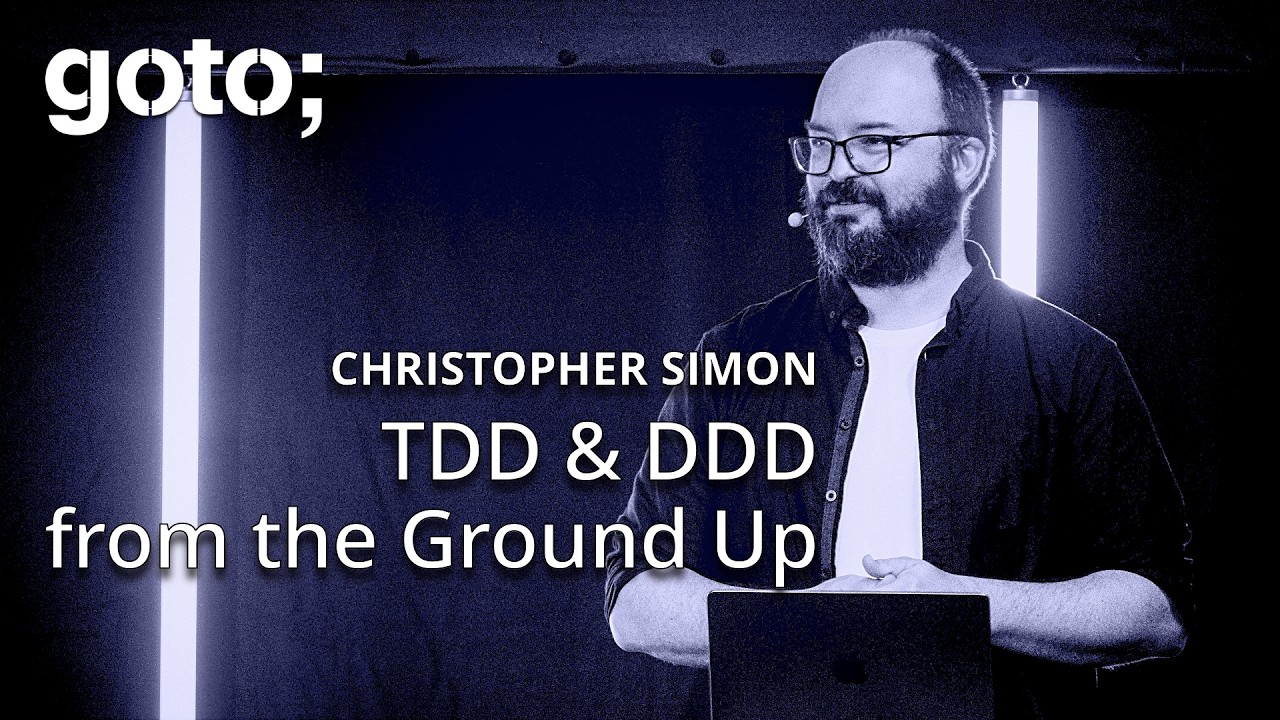
TDD & DDD from the Ground Up
Past masterclasses featuring Christopher Simon
2 Days: Imagine the Future and Build for the Now – System Design from Launch to Scale | GOTO Copenhagen 2025
Browse all experts
Here