Randy Shoup
SVP of Engineering at CircleCI
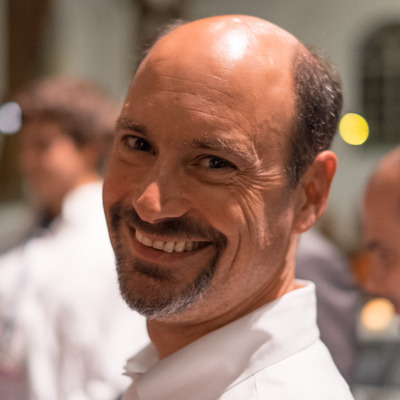
Randy Shoup
SVP of Engineering at CircleCI
Randy has spent more than 30 years building distributed systems and high performing teams, and has worked as a senior technology leader at eBay, Google, and Stitch Fix. He coaches CTOs, advises companies, and generally makes a nuisance of himself wherever possible.
As SVP of Engineering, he currently leads the Engineering organization at CircleCI.
Upcoming conference sessions featuring Randy Shoup

Back to Fundamentals: With Models, Modularity Matters More
AI accelerates everything, both good and bad. In Q3 2026, the top 5% of software organizations produced 10x faster PR throughput than the median teams, and the top 1% were 100x faster. At the same time, the bottom 75% have not improved throughput at all over the last year. What are those top organizations doing differently? They do not have some magical new AI secrets no one else knows. Instead, they have prioritized engineering their development platforms and practices for feedback, for flow, and for modularity, using the same fundamental techniques we all have known about for decades. As a consequence, the top organizations are fully taking advantage of AI-accelerated engineering. And the rest are stuck.
We will first discuss engineering the Inner Loop of code / build / test for fast comprehensive feedback. We will go through the patterns of Small Incremental Changes, Shift Left, Spec-Driven Development, Adversarial LLM Review, etc. Organizations cannot produce code at machine speed, and continue to evaluate code at human speed.
Next, we will engineer the Outer Loop for smooth flow and Continuous Delivery. This validation and integration loop is where most teams are currently stuck. We will discuss what the top organizations are doing to improve Merge Efficiency – how many attempts it takes to get a typical change into a production-ready artifact.
Finally, we will design the Architecture for modularity using techniques like DDD and Hexagonal Architecture. We will remind ourselves how dividing a large system into independently developed and deployed components both improves reliability and produces optionality for the business.
The teams getting the most out of AI are not the ones with the fanciest models — they are the ones with the most intentional architectures and the most disciplined delivery practices. DDD ensures that AI understands what to build and where it goes; Continuous Delivery ensures you can ship AI-assisted changes safely and frequently. Together, they create a virtuous cycle where AI accelerates development while the engineering practices keep quality high. You'll leave this talk with concrete practices for combining all three that you can put to work in your own teams and systems immediately.
Get conference pass
We Doubled Engineering Productivity at eBay, but Couldn't Change Culture
This is the story of eBay’s company-wide Velocity initiative, which doubled engineering productivity across all 5000 engineers, but still could not save the company from its own pathological organizational culture.
Once a stock market darling and a pioneering hyperscaler in the 1990s and early 2000s, eBay has been in steady decline since the 2010s. A household name with a flat business, eBay has been unable to make substantive strides in its market reach or its engineering outcomes in the last 15 years. What happened?
Randy was a Distinguished Architect at eBay from 2004 to 2011, and returned as Chief Architect and VP of Platform Engineering from 2020 to 2022. As Chief Architect, he led the company-wide Velocity initiative, which has continued to double engineering productivity across the board. By executing a pretty standard DevOps playbook, this has been an unqualified success on the engineering side. In the three years since, teams have improved on all of the DORA software delivery metrics, and report better collaboration and developer satisfaction.
At the same time, improvements have stagnated, and teams consistently struggle to reach Elite status or to alter the overall trajectory of the business. This talk is an insider’s attempt to make sense of this seeming contradiction between micro-successes and macro-failures, and attempts to abstract 20 years of participation and observation into a set of actionable lessons for any organization attempting to transform itself.
We will deep dive into the following:
- Strategy and Planning, encompassing Learned Helplessness, the Innovator’s Dilemma, and Centralized Waterfall Planning
- Execution and Delivery, covering Massive Coordinated Releases, and the “Feature Factory”
- Organizational Culture, epitomizing Westrum’s pathological culture with zero-sum thinking, empire building, risk aversion, and a constitutional inability to acknowledge failures
You will learn
- how to successfully execute a massive technical transformation across thousands of people using the Accelerate / DevOps playbook
- why a technical transformation by itself is not enough
- how we would have done things differently in hindsight
Get conference pass
Back to Fundamentals: With Models, Modularity Matters More
AI accelerates everything, both good and bad. In Q3 2026, the top 5% of software organizations produced 10x faster PR throughput than the median teams, and the top 1% were 100x faster. At the same time, the bottom 75% have not improved throughput at all over the last year. What are those top organizations doing differently? They do not have some magical new AI secrets no one else knows. Instead, they have prioritized engineering their development platforms and practices for feedback, for flow, and for modularity, using the same fundamental techniques we all have known about for decades. As a consequence, the top organizations are fully taking advantage of AI-accelerated engineering. And the rest are stuck.
We will first discuss engineering the Inner Loop of code / build / test for fast comprehensive feedback. We will go through the patterns of Small Incremental Changes, Shift Left, Spec-Driven Development, Adversarial LLM Review, etc. Organizations cannot produce code at machine speed, and continue to evaluate code at human speed.
Next, we will engineer the Outer Loop for smooth flow and Continuous Delivery. This validation and integration loop is where most teams are currently stuck. We will discuss what the top organizations are doing to improve Merge Efficiency – how many attempts it takes to get a typical change into a production-ready artifact.
Finally, we will design the Architecture for modularity using techniques like DDD and Hexagonal Architecture. We will remind ourselves how dividing a large system into independently developed and deployed components both improves reliability and produces optionality for the business.
The teams getting the most out of AI are not the ones with the fanciest models — they are the ones with the most intentional architectures and the most disciplined delivery practices. DDD ensures that AI understands what to build and where it goes; Continuous Delivery ensures you can ship AI-assisted changes safely and frequently. Together, they create a virtuous cycle where AI accelerates development while the engineering practices keep quality high. You'll leave this talk with concrete practices for combining all three that you can put to work in your own teams and systems immediately.
Get conference pass
Content featuring Randy Shoup

Pragmatic Microservices

Attitude Determines Altitude: Engineering Yourself and Your Teams

Effective Microservices in a Data-Centric World

Attitude Determines Altitude

Moving Fast At Scale

Moving Fast at Scale
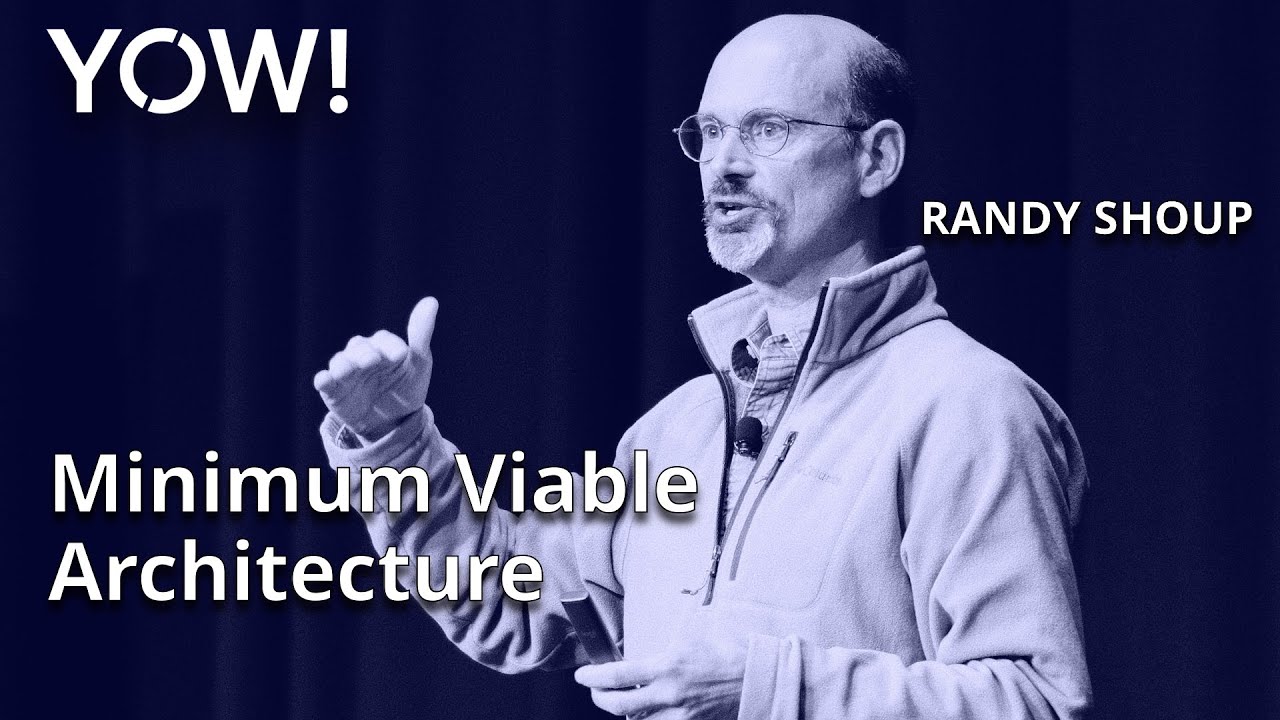
Minimal Viable Architecture

Systems Architecture at Massive Scale: The Unreasonable Effectiveness of Simplicity
Minimal Viable Architecture

Improving Software Flow
Minimal Viable Architecture
Improving Software Flow

Doubling Engineering Productivity at eBay Through DevOps

Building Modern Software at Scale: Architectural Principles Two Decades in the Making
Browse all experts
Here